

Routing that adapts
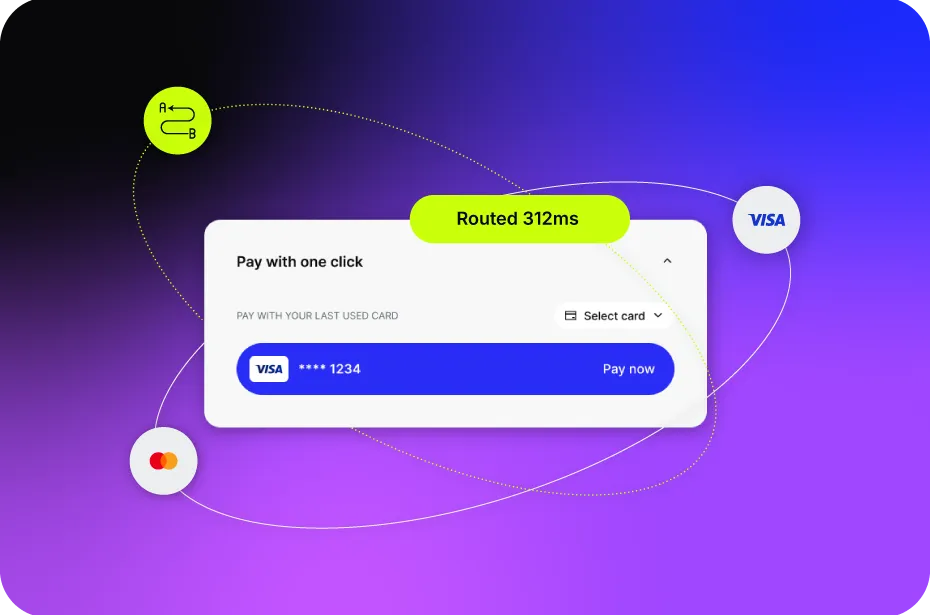
PXP dynamically routes transactions based on real-time conditions, historical performance, and business rules. Static routing leads to avoidable declines and lost revenue. Smart routing keeps your approval rates high and your operations resilient.

Traditional routing leaves performance on the table
Sending every transaction to one acquirer is not realistic at scale. Acquirer performance varies by region, time, and card type. Outages, latency, and issuer behaviour change constantly, and partial degradation happens frequently and unpredictably. Switching providers manually is slow and reactive, and limited visibility makes it hard to know when performance is shifting.
How smart routing works
Performance-based routing
Non-sticky decisioning
Retry logic and cascades
Downtime detection
Self-service routing rules
Configure routing logic to support your specific business requirements. This includes on-us transaction routing, least-cost debit routing, and preferences based on cost, region, or card type. Rules are managed through a self-service interface, so your team can adapt routing strategy without waiting for development cycles.
01
On-us transaction routing
02
Least-cost debit routing
03
Region and card type preferences
Stop losing revenue to static routing.
Talk to our team about adaptive routing built for your traffic, your processors, and your performance goals.